The Elves Learn to be Lazy
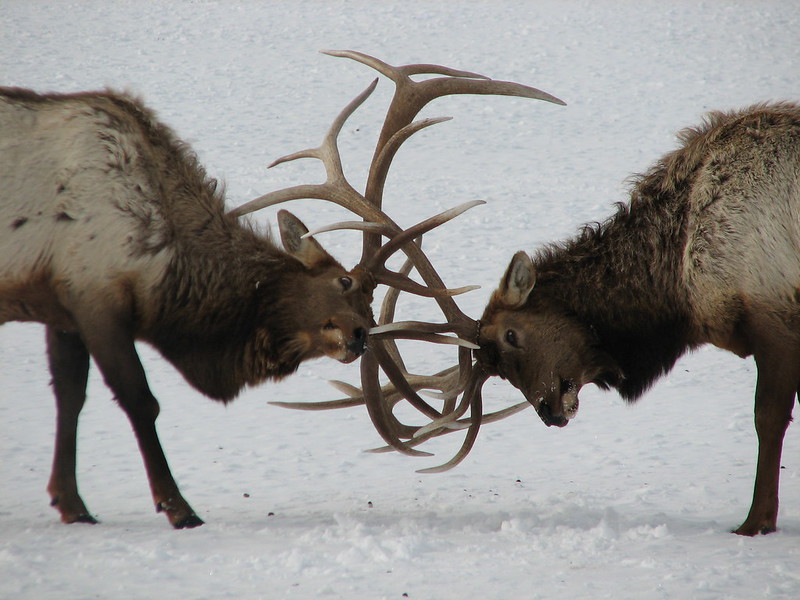
"Two Bulls Clash Antlers" by USFWS Mountain Prairie is licenced under CC BY 2.0 
 .
.
The Naughty or Nice Subsystem
Putting together Santa's naughty or nice list is one of the elves' most important tasks. To assist them a Naughty or Nice Subsystem (NORN) has been developed over many years.
Initially the system was very simple. The norn table had a row for every child and Santa would go through and set the is_nice column to either true or false. The elves would then run the list generation routine, Santa would check it twice, and Christmas would proceed.
After a particularly difficult year Holly the elf, wearing her PM hat, decided that this decision couldn't be left to Santa's whims and that each child's actions over the year should be categorised and stored as either good or bad in the norn table. The child was considered nice if they had been good more often than bad.
Some time later Holly thought that some actions were either very_good or very_bad and should count double.
As each set of modifications took place the is_nice method became more complicated, but the tests didn't. The elves were loath to work on such important code with a limited safety net.
A New Algorithm
Last year young Sophie Farrington from Finsbury Park, somewhat upset at finding only coal in her stocking, issued an FOI request. She subsequently claimed that many of her actions which had been categorised as bad were, at worst, cheeky and were perhaps even charming. Mrs Claus agreed, and tasked the elves in the R&D department to come up with a more fair algorithm.
Eventually the algorithm was finalised and Holly created a new story for the backlog. It replaced the old very_good and very_bad categories with more nuanced categories of noble, virtuous, errant and iniquitous to go with the original good and bad classifications. And there was a suitably complicated algorithm to accompany them to determine the ultimate judgement.
But none of the elves wanted to pick it up. The code was just too brittle and, since the external consulting company had recommended Santa only checking the list once as a cost-saving measure, and later that the checking should be completely skipped, no one wanted to be known as the elf who messed up the Naughty or Nice list and ruined Christmas.
But doing nothing wasn't an option either.
The Reindeer's Cousins
With Christmas on the line, Santa called everyone in to find a solution. It was Blitzen who had the bright idea of getting the reindeer's cousins, the moose, involved.
Donner explained the concept. By converting the plain OO class to use Moose it becomes easy to break up large methods. The key is to use lazy attributes to calculate variables within the algorithm. This simplifies the code around the algorithm and, crucially, makes it easy to test parts of the algorithm rather than just the end result.
Prancer further explained that by using lazy attributes the return value is only calculated once, and then it is stored and immediately returned on subsequent calls. Even better, each attribute is calculated only when first accessed. If the code never calls $norn->noble_count, that expensive calculation never runs at all. This helps keep the code efficient too, which is important with a list of over one billion entries.
Laziness
The elves took on the project. And it wasn't too difficult. The class API didn't really change, it just expanded. So existing code using Norn->new(...)->is_nice worked identically with NornV2, making the migration straightforward and low-risk.
The original code contained one large method with lots of expensive calculations. It looked something like:
package Norn;

use 5.42.0;

sub new {
  my ($class, %args) = @_;
  die "child_id is required"    unless exists $args{child_id};
  die "child_id must be an Int" unless $args{child_id} =~ /^\d+$/;
  bless \%args, $class
}

sub is_nice {
  my ($self) = @_;
  my $sum = 0;

  # expensive calculation to get event data
  my $event_data = { ... };

  # expensive calculation of good count from $event_data
  my $good = ...;
  $sum += $good;

  # expensive calculation of bad count from $event_data
  my $bad = ...;
  $sum -= $bad;

  # expensive calculation of very good count from $event_data
  my $very_good = ...;
  $sum += $very_good * 2;

  # expensive calculation of very bad count from $event_data
  my $very_bad = ...;
  $sum -= $very_bad * 2;

  $sum >= 0
}

1
The test code was fairly simple:
#!/usr/bin/perl

use 5.42.0;
use Test2::V0;
use Norn;

subtest setup => sub {
  # set up test fixtures
};

subtest is_nice => sub {
  my $norn = Norn->new(child_id => 1);
  is $norn->child_id, 1, "child_id is 1";
  ok $norn->is_nice, "is nice";
};

subtest teardown => sub {
  # tear down test fixtures
};

done_testing;
The updated code was obviously more involved but was broken into individual methods, each of which was simple enough to understand and test individually.
package NornV2;

use 5.42.0;
use Moose;

has child_id => is => "ro", isa => "Int", required => 1;

has event_data       => is => "ro", lazy => 1, builder => "_build_event_data";
has noble_count      => is => "ro", lazy => 1, builder => "_build_noble_count";
has good_count       => is => "ro", lazy => 1, builder => "_build_good_count";
has virtuous_count   => is => "ro", lazy => 1, builder => "_build_virtuous_count";
has errant_count     => is => "ro", lazy => 1, builder => "_build_errant_count";
has bad_count        => is => "ro", lazy => 1, builder => "_build_bad_count";
has iniquitous_count => is => "ro", lazy => 1, builder => "_build_iniquitous_count";

sub _build_event_data ($self) {
  # expensive calculation to get event data
}

sub _build_noble_count ($self) {
  my $event_data = $self->event_data;
  # expensive calculation of noble count from $event_data
}

sub _build_good_count ($self) {
  my $event_data = $self->event_data;
  # expensive calculation of good count from $event_data
}

sub _build_virtuous_count ($self) {
  my $event_data = $self->event_data;
  # expensive calculation of virtuous count from $event_data
}

sub _build_errant_count ($self) {
  my $event_data = $self->event_data;
  # expensive calculation of errant count from $event_data
}

sub _build_bad_count ($self) {
  my $event_data = $self->event_data;
  # expensive calculation of bad count from $event_data
}

sub _build_iniquitous_count ($self) {
  my $event_data = $self->event_data;
  # expensive calculation of iniquitous count from $event_data
}

sub is_nice ($self) {
  my $sum = 0;

  # assign $sum from a complicated algorithm involving
  # $self->noble_count, $self->good_count, $self->virtuous_count,
  # $self->errant_count, $self->bad_count, $self->iniquitous_count

  $sum >= 0
}

no Moose;

__PACKAGE__->meta->make_immutable;

1
And the test code was still fairly simple but, importantly, was able to test individual data values stored in the lazy attributes.
#!/usr/bin/perl

use 5.42.0;
use Test2::V0;
use NornV2;

subtest setup => sub {
  # set up test fixtures
};

subtest is_nice => sub {
  my $norn = NornV2->new(child_id => 1);
  is $norn->child_id, 1, "child_id is 1";

  my $gold_event_data = {...};  # expected event data for child_id 1
  is $norn->event_data, $gold_event_data, "event data";

  is $norn->noble_count,      15,  "noble count";
  is $norn->good_count,       104, "good count";
  is $norn->virtuous_count,   226, "virtuous count";
  is $norn->errant_count,     51,  "errant count";
  is $norn->bad_count,        20,  "bad count";
  is $norn->iniquitous_count, 3,   "iniquitous count";

  ok $norn->is_nice, "is nice";
};

subtest teardown => sub {
  # tear down test fixtures
};

done_testing;
Conclusion
The elves were very happy with their new code. With it broken down into manageable and individually testable methods they didn't fear making changes to the Naughty or Nice system.
Dasher and Comet noted that not only was the code improved, but the elves were also able to crank it out faster and with fewer bugs.
Mrs Claus was glad that the coal deliveries were reduced.
And young Sophie Farrington turned out to be nice after all, so Santa rewarded her with a stocking full of chocolate coins and tangerines.
 This article contributed by: Paul Johnson <paul@pjcj.net>